I have to preface this article with a few things before I begin.
1. Our congregation has amazing volunteers and we could not have done the Holy Week Walk with out them.
2. We did not have a budget for this event. We actually took a hit in 2013, so we had very little means to create what we did.
3. This was the first time we did this and we planned for the better part of a year to make it happen.
With that said...here we go.
Pre planning
It goes without saying that any event needs some kind of planning. And the better the planning the more likely you will meet your goals and succeed during the event. In the case of the Holy Week Walk (see last weeks post for details) we knew we were going to need time and help to pull it off. We actually had the idea about 3 years ago when our Education Director visited the church that gave us the idea. She took part in the walk and thought we could bring it to Word of Peace. It took her and the education team of volunteers a year and a half to finally put it into motion and 6 months of meetings to work out the details. Whew, that's a lot! But it was needed. The Holy Week Walk is no easy task. In the end there were over 60 volunteers, food for 300, a script to write and 6 different scenes to create.
The Volunteers
Love your volunteers, thank your volunteers and most of all ask everyone to volunteer. We were so blessed with amazing people, most of which have never been a part of a drama at church, be willing to help. It's not easy finding 12 guys to act as disciples! We also discovered so many new gifts in the congregation that we never knew existed.
Food
Finding grape juice, parsley, water and salt is fairly easy for 300 people. Matzo on the other hand was not. Planning ahead was crucial here so we could have enough supplies.
The Script
Knowing your audience for our script was imperative. We wanted to bring the last week of Jesus to people of all ages. More importantly, we wanted children to understand what Jesus went through for us.
This framed our script and made some of the heaver points less important. We thought having a narrator and two witnesses travel with and guide the group through the different scenes would be most effective. The job of the witnesses was to ask the questions that everyone, especially the children would be thinking. "Why is Jesus washing their feet? Why are they arresting Jesus? Who is that woman and why is she crying?"
Looking at the life of Jesus through the eyes of children is a wonderful way to deepen your faith and even ask some great questions.
We did leave a few parts out of Holy Week. We didn't show any of the brutal beating or crucifixion or Jesus hanging on the cross. Those are important parts, but all lead to the death of Jesus and that is the most important.
Setting the Scene
This is the most expensive part of the Holy Week Walk. The more props you have, the better it will look and feel. Costumes were key. They helped differentiate the actors from the participants.
We did purchase a few big items like a Jesus, Pilate and Roman Solider costumes. We also found 4 shade tents at a really good price for the streets of Jerusalem marketplace.
The rest came from donations, things we had laying around the church or items from people's homes.
Preparing for the Unknown
When all the planning was said and done we still had no idea how many people to expect. This was our first time. It's on a weekday afternoon.
We needed a way to know how many to plan for so we invited the congregation to "RSVP" for a time through text and email. This was also the first time we tried something like this. We got a small response at first but as the week went on the responses started coming in more and more. We began to be concerned if we would have enough. We set up for 125 at each walk. When almost 220 showed up each time it was a modern day Fish and Loafs story. We had enough and God blessed us with an amazing showing of support.
Final Thoughts
We are so happy that this went well. We have lots to learn and even more ideas for next year. If you or your church would be interested in something like this, we would be more than happy to answer any questions for you.
My advise: start planning now because Easter is coming sooner than you think.
God Bless,
Dain
Monday, May 19, 2014

Monday, May 12, 2014
Holy Week Walk
Trying something new comes with risks and rewards.
Over the past few years we noticed that our congregation and their families tend to show up in droves to Christmas, Palm Sunday and Easter. Don't get me wrong, we love to pack the place whenever we can, but we were noticing something wrong with this picture. The celebration of the birth, triumphal entry and resurrection of Jesus are all positive. What we saw were families missing the whole point of Jesus' resurrection. Why was Jesus born, why did he come into Jerusalem and why do we celebrate the resurrection? As Christians and Lutherans we believe that we are both sinner and saint, at the same time. This means that there are two sides to the story. Baby Jesus was born so that he may die. He entered Jerusalem as a beginning of a journey to the cross. And most importantly, you can't resurrect without first dying! As a church we had to ask the tough question of "how do offer opportunities for our community to experience holy week?"
In past years we have done more of a Passion Sunday rather than just Palm Sunday where we experience the entry into Jerusalem, the Last Supper and a little of Good Friday all within the Palm Sunday worship service. It helped to educate people more about Holy Week, but it didn't help involve anyone outside of our Sunday or Monday services.
Our Education director Kristin Skare recently visited St. Andrew's Lutheran in Mahtomedi, MN and experienced their Holy Week "Walk with Jesus". She was impressed at the number of families involved and was moved by the "incompleteness" of the story and subsequent invitation to come back on Easter to see how the story ends.
Implementing something like this at Word of Peace would be no easy task, but we have never backed down from a good challenge. Could we pull it off? How many people would come? Was it worth it? We have always been blessed with amazing volunteers and when the idea was pitched the support from staff and congregation members alike made us very hopeful.
Over the course of 3 months we prepared for the Holy Week Walk. In the end we transformed our entire church into the major scenes of Holy Week inviting families to come and walk in the steps of Jesus and experience his final week before the cross. Below is a brief outline of the Holy Week Walk.
The Streets of Jerusalem



Our next stop was the house of Pontius Pilate where Jesus was placed on trial.

One of the things we were concerned about was the crucifixion and how we wanted to treat the death of Jesus. We decided to not show any blood or Jesus hanging on the cross. We made sure people knew that Jesus died, but they only thing they saw was an empty cross.


Here we gathered everyone at the foot of the cross with Mary the mother of Jesus. The song Pie Jesu by Andrew Webber was sung as a duet and the crowd was invited back into the sanctuary to see the tomb.

In the end we planned for 125 people to come for 2 showings. We had over 220 people there each time! We were blown away by the response and couldn't believe how God was working through us. We were truly blessed this Holy Week and are so excited for next year.
We took a risk that involved a lot of work, changes in the Good Friday traditional worship service and involving tons of people on a weekday in the afternoon. but our prayers were answered and amazing things happened!
Next week I will focus a little more on the behind the scenes aspects of the Holy Week walk and what it took for us to accomplish it.
Till then, God bless.
Dain
Over the past few years we noticed that our congregation and their families tend to show up in droves to Christmas, Palm Sunday and Easter. Don't get me wrong, we love to pack the place whenever we can, but we were noticing something wrong with this picture. The celebration of the birth, triumphal entry and resurrection of Jesus are all positive. What we saw were families missing the whole point of Jesus' resurrection. Why was Jesus born, why did he come into Jerusalem and why do we celebrate the resurrection? As Christians and Lutherans we believe that we are both sinner and saint, at the same time. This means that there are two sides to the story. Baby Jesus was born so that he may die. He entered Jerusalem as a beginning of a journey to the cross. And most importantly, you can't resurrect without first dying! As a church we had to ask the tough question of "how do offer opportunities for our community to experience holy week?"
In past years we have done more of a Passion Sunday rather than just Palm Sunday where we experience the entry into Jerusalem, the Last Supper and a little of Good Friday all within the Palm Sunday worship service. It helped to educate people more about Holy Week, but it didn't help involve anyone outside of our Sunday or Monday services.
Our Education director Kristin Skare recently visited St. Andrew's Lutheran in Mahtomedi, MN and experienced their Holy Week "Walk with Jesus". She was impressed at the number of families involved and was moved by the "incompleteness" of the story and subsequent invitation to come back on Easter to see how the story ends.
Implementing something like this at Word of Peace would be no easy task, but we have never backed down from a good challenge. Could we pull it off? How many people would come? Was it worth it? We have always been blessed with amazing volunteers and when the idea was pitched the support from staff and congregation members alike made us very hopeful.
Over the course of 3 months we prepared for the Holy Week Walk. In the end we transformed our entire church into the major scenes of Holy Week inviting families to come and walk in the steps of Jesus and experience his final week before the cross. Below is a brief outline of the Holy Week Walk.
The Streets of Jerusalem
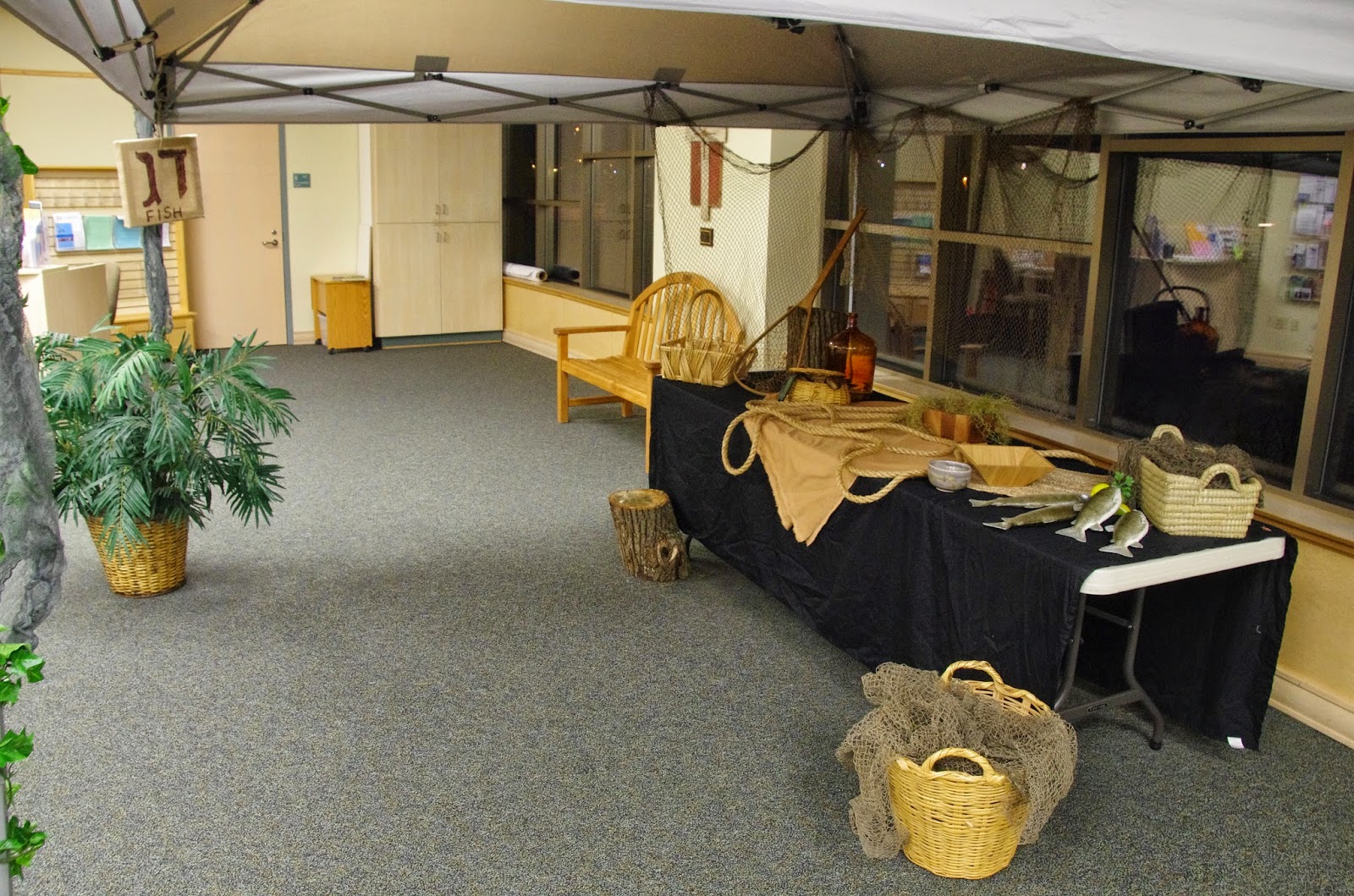
When people attending the Holy Week Walk arrive they are greeted by a gathering area that had been transformed into a Jerusalem street. Different vendors and actors roam the booths and invite people to take part. We had different booths for fish, pottery, bread, and spices. There was also a prayer wall where people could write down prayers and tie them to a wall.
The walk was lead by a Narrator and two witnesses. They helped people along and described the events that were taking place. There were also musicians with guitars that would lead a song or two in every scene. Jesus entered the street and was followed by a live colt. The kids loved that one! We then followed Jesus and his disciples to the Last Supper
The Last Supper
The crowd was welcomed into our sanctuary for the Seder Meal. Jesus and his followers sat up front and acted out the last supper. The narrator and witnesses then invited everyone to try some of the unleavened bread, bitter herbs and grape juice.
The Garden of Gethsemane
We then headed to the garden where Jesus prayed. We had originally planned to be outside, but 9 inches of snow changed our minds. We quickly created a garden scene on one corner of the sanctuary that was not being used.
Our next stop was the house of Pontius Pilate where Jesus was placed on trial.
One of the things we were concerned about was the crucifixion and how we wanted to treat the death of Jesus. We decided to not show any blood or Jesus hanging on the cross. We made sure people knew that Jesus died, but they only thing they saw was an empty cross.
Here we gathered everyone at the foot of the cross with Mary the mother of Jesus. The song Pie Jesu by Andrew Webber was sung as a duet and the crowd was invited back into the sanctuary to see the tomb.
In the end we planned for 125 people to come for 2 showings. We had over 220 people there each time! We were blown away by the response and couldn't believe how God was working through us. We were truly blessed this Holy Week and are so excited for next year.
We took a risk that involved a lot of work, changes in the Good Friday traditional worship service and involving tons of people on a weekday in the afternoon. but our prayers were answered and amazing things happened!
Next week I will focus a little more on the behind the scenes aspects of the Holy Week walk and what it took for us to accomplish it.
Till then, God bless.
Dain
Monday, May 5, 2014
Crucify Him - Good Friday 2014
To be perfectly honest, my favorite day of Holy Week is Good Friday. For some reason I feel closer to God through the suffering and anguish of Jesus on Good Friday. How many times have I asked the same questions as Jesus in the garden? "Lord take this cup from me," I don't want to do this, why do I have to go through this? But Jesus continues on and prays a prayer that I would hope everyone could bring themselves to say: "Yet, not my will Lord, but your will be done."
This is why I love Good Friday. I love the questions, the darkness, the suffering, the pain. I love that Jesus knows my pain and suffering in my life because of the excruciating ordeal he went through in order for us to spend eternity together in heaven. Without Good Friday there is no Easter!
A few years back I attended a Good Friday service at The Upper Room and I was moved in ways that filled my soul with a true meaning and depth of what Jesus did for us. Their use of video clips, smells, the cross, and the sound of nails pounding created a multi-sensory experience that I wanted to recreate at Word of Peace.

The Passion Experience is a small experiential worship service held in a large back room that can fit about 60 people. The service is media based and all instructions, prayers, video clips and words to songs are projected on the wall. The room is decorated with candles, a cross and mood lighting. The chairs have a black piece of paper and a pencil for use during the service. The video clips are taken from The Passion of Christ movie. I edited them down and incorporated Bible verses that a narrator reads. The music during the service is one voice and a guitar. The simplicity is powerful.
At one point during the service the congregation is invited to write down sins and nail them to the cross while we sing Jesus Paid it All and the Wonderful Cross. Once again...powerful.

The end of the service is the most important part. Even though people know Easter is coming we leave the worship service as a cliffhanger. There is no hint of the resurrection and only an invitation to finish the story on Sunday morning.
The service is prayerful and very introspective for those that attend and I am excited that it has become a tradition for a small number of worshippers at Word of Peace. The content of the video is more mature, but because of the way I have edited the clips children as young as 5th grade have come to the service.
Continually look at Holy week as an opportunity to explore the story of Jesus. It is rich and full of meaning. Focus on the sights, sounds, smells and feelings that took place those final days of Jesus' life. Bring the story to life and have people participate in more than just song during the service. You might just be surprised how meaningful this can be to people and their faith.
Blessings,
Dain
This is why I love Good Friday. I love the questions, the darkness, the suffering, the pain. I love that Jesus knows my pain and suffering in my life because of the excruciating ordeal he went through in order for us to spend eternity together in heaven. Without Good Friday there is no Easter!
A few years back I attended a Good Friday service at The Upper Room and I was moved in ways that filled my soul with a true meaning and depth of what Jesus did for us. Their use of video clips, smells, the cross, and the sound of nails pounding created a multi-sensory experience that I wanted to recreate at Word of Peace.
The Passion Experience is a small experiential worship service held in a large back room that can fit about 60 people. The service is media based and all instructions, prayers, video clips and words to songs are projected on the wall. The room is decorated with candles, a cross and mood lighting. The chairs have a black piece of paper and a pencil for use during the service. The video clips are taken from The Passion of Christ movie. I edited them down and incorporated Bible verses that a narrator reads. The music during the service is one voice and a guitar. The simplicity is powerful.
At one point during the service the congregation is invited to write down sins and nail them to the cross while we sing Jesus Paid it All and the Wonderful Cross. Once again...powerful.
The end of the service is the most important part. Even though people know Easter is coming we leave the worship service as a cliffhanger. There is no hint of the resurrection and only an invitation to finish the story on Sunday morning.
The service is prayerful and very introspective for those that attend and I am excited that it has become a tradition for a small number of worshippers at Word of Peace. The content of the video is more mature, but because of the way I have edited the clips children as young as 5th grade have come to the service.
Continually look at Holy week as an opportunity to explore the story of Jesus. It is rich and full of meaning. Focus on the sights, sounds, smells and feelings that took place those final days of Jesus' life. Bring the story to life and have people participate in more than just song during the service. You might just be surprised how meaningful this can be to people and their faith.
Blessings,
Dain
Monday, April 28, 2014
Lenten Worship and the art of invitation and curiosity
Holy Week has come and gone and I can finally get back to the blog! It has been a whirlwind of a past few weeks and I have many things to share in the upcoming posts. I hope you enjoy them.
This week I want to focus on the close of Lent. First off, I am glad that Lent is five weeks long. It seems like just the right amount of time to prepare for Holy Week and Easter. You ramp up Lenten worship and the Lenten disciplines and then just by the time you start to feel like it's never going to end...it does.
This year's main piece was our Lenten chalkboard and dramas. Each week we worshipped with the Holden Evening Prayer Service, a drama based on the Parables of Jesus and a chance to write on the chalkboard. Here is the list of the parables and phrases on the board. There is also a link to watch the worship services and dramas as well.
Week 1. The Parable of the Pharisee and the Tax Collector
Chalkboard: Jesus I Pray...
Week 2. The Parable of the Unforgiving Servant
Chalkboard: I am forgiven for... & I need to forgive someone for...
Week 3. The Parable of the Sower
Chalkboard: My roots grow deep when...
Week 4. The Parable of the Prodigal Son.
Chalkboard: God's Love is...
Week 5. The Parable of the Good Samaritan
Chalkboard: I am a neighbor when...
For me, the most important part of Lent this year was letting people who only can come to worship on Sundays also be able to participate in our Lenten journey together. So often we create a "mini congregation" on Wednesday nights during Lent and the smaller number of people that attend are the only ones that know what is going on. The positive side is that they go on this journey together and they share a rather unique experience. The down side is they generally keep the experience to themselves.
I tried to be more inclusive by moving the chalkboard out into our gathering area during the rest of the week. Not only were people able to view the responses from the Wednesday night services they were encouraged to add their own. A sign was placed on the board that invited them to attend the services as well.
My hope was to see an exponential jump in numbers for our Wednesday night services because people saw the chalkboard on Sunday. Numbers did grow, but not like I had hoped.
What I did hear was how much the people who did attend enjoyed the chalkboard experience. There were many comments about how they loved seeing their confirmation classes excited each week to come to worship and PARTICIPATE. This, for me, is a huge win! Middle school youth and adults excited to see what next week has in store; one would hope this could be a new trend in our church today.
1. Inspiring people to worship is not my job. This is the job of the Holy Spirit, Jesus and God the Father! We are only vessels in which God can use to help inspire those to a life of worship and growing in their faith. Our job is to listen and follow where Christ is leading us.
2. Attendance isn't everything. Numbers and statistics are a great way to keep track of activity in your congregation, but there is no way to put a number to how people are effected emotionally or their life is changed because of a song, drama or writing on a chalkboard. Our hope as the Worship and Visual Arts Team at Word of Peace is to provide the opportunities for people to encounter Christ in new ways. The numbers and feedback from worship attendees will give us a good idea as to what worked and what didn't, but in the end faith is a personal matter and it comes in many forms. Attending worship is only one of many.
3. Invitation is a culture that needs cultivation. Honestly, Word of Peace is not a church that tends to invite people to worship. Church (Sunday) School, Confirmation, Youth Group and the community Corn Feed; these are the types of ministries that have a strong culture of invitation. Inviting people to worship is a different and slightly more difficult and personal matter. Finding people who have a gift of invitation and hospitality should be essential for every congregation. We as worship and visual and media artists need to provide aspects of worship that will give those people specifics when describing something "new and exciting" at our church they "have to come and experience". It's teamwork and lot of work. But if a culture of invitation and curiosity is continually cultivated then seeds will be planted about worship. They may not grow right away, but who doesn't appreciate being invited to something. The key is to invite them to something specific. "We are doing this awesome series in worship," or "We've had really great dramas and this cool chalkboard during worship on Wednesday night, you should come and check it out."
4. Follow up is also key. If you invite someone to worship, why not worship with them? Be that familiar face so they will know someone and feel comfortable coming into your church.
In the coming weeks I will be focusing on the amazing things that happened at Word of Peace during Holy Week. We focused on some of our traditional Palm Sunday events as well as introducing something brand new on Maundy Thursday and Good Friday. Not to mention all the great visuals on Easter. Check back every week for more posts.
God Bless,
Dain
This week I want to focus on the close of Lent. First off, I am glad that Lent is five weeks long. It seems like just the right amount of time to prepare for Holy Week and Easter. You ramp up Lenten worship and the Lenten disciplines and then just by the time you start to feel like it's never going to end...it does.
This year's main piece was our Lenten chalkboard and dramas. Each week we worshipped with the Holden Evening Prayer Service, a drama based on the Parables of Jesus and a chance to write on the chalkboard. Here is the list of the parables and phrases on the board. There is also a link to watch the worship services and dramas as well.
Week 1. The Parable of the Pharisee and the Tax Collector
Chalkboard: Jesus I Pray...
Week 2. The Parable of the Unforgiving Servant
Chalkboard: I am forgiven for... & I need to forgive someone for...
Week 3. The Parable of the Sower
Chalkboard: My roots grow deep when...
Week 4. The Parable of the Prodigal Son.
Chalkboard: God's Love is...
Week 5. The Parable of the Good Samaritan
Chalkboard: I am a neighbor when...
For me, the most important part of Lent this year was letting people who only can come to worship on Sundays also be able to participate in our Lenten journey together. So often we create a "mini congregation" on Wednesday nights during Lent and the smaller number of people that attend are the only ones that know what is going on. The positive side is that they go on this journey together and they share a rather unique experience. The down side is they generally keep the experience to themselves.
I tried to be more inclusive by moving the chalkboard out into our gathering area during the rest of the week. Not only were people able to view the responses from the Wednesday night services they were encouraged to add their own. A sign was placed on the board that invited them to attend the services as well.
My hope was to see an exponential jump in numbers for our Wednesday night services because people saw the chalkboard on Sunday. Numbers did grow, but not like I had hoped.
What I did hear was how much the people who did attend enjoyed the chalkboard experience. There were many comments about how they loved seeing their confirmation classes excited each week to come to worship and PARTICIPATE. This, for me, is a huge win! Middle school youth and adults excited to see what next week has in store; one would hope this could be a new trend in our church today.
What I learned
2. Attendance isn't everything. Numbers and statistics are a great way to keep track of activity in your congregation, but there is no way to put a number to how people are effected emotionally or their life is changed because of a song, drama or writing on a chalkboard. Our hope as the Worship and Visual Arts Team at Word of Peace is to provide the opportunities for people to encounter Christ in new ways. The numbers and feedback from worship attendees will give us a good idea as to what worked and what didn't, but in the end faith is a personal matter and it comes in many forms. Attending worship is only one of many.
3. Invitation is a culture that needs cultivation. Honestly, Word of Peace is not a church that tends to invite people to worship. Church (Sunday) School, Confirmation, Youth Group and the community Corn Feed; these are the types of ministries that have a strong culture of invitation. Inviting people to worship is a different and slightly more difficult and personal matter. Finding people who have a gift of invitation and hospitality should be essential for every congregation. We as worship and visual and media artists need to provide aspects of worship that will give those people specifics when describing something "new and exciting" at our church they "have to come and experience". It's teamwork and lot of work. But if a culture of invitation and curiosity is continually cultivated then seeds will be planted about worship. They may not grow right away, but who doesn't appreciate being invited to something. The key is to invite them to something specific. "We are doing this awesome series in worship," or "We've had really great dramas and this cool chalkboard during worship on Wednesday night, you should come and check it out."
4. Follow up is also key. If you invite someone to worship, why not worship with them? Be that familiar face so they will know someone and feel comfortable coming into your church.
In the coming weeks I will be focusing on the amazing things that happened at Word of Peace during Holy Week. We focused on some of our traditional Palm Sunday events as well as introducing something brand new on Maundy Thursday and Good Friday. Not to mention all the great visuals on Easter. Check back every week for more posts.
God Bless,
Dain
Monday, March 31, 2014
Lenten Worship pt 2
Trying Something New
The idea of trying something new is at best a little scary in a church setting. Churches are built on traditions and stories of Jesus who is 2000 years old. There are a lot of traditions to deal with when attending a church.
At Word of Peace we are Lutheran, and that means we have traditions. We are in the midwest, so that means lots of Scandinavians. And that also means resistance to change and new things. But I am a person that likes to try new things. I love to eat at the latest restaurant as well as frequent favorites. I like to listen to new music and decide AFTER I hear it whether or not I like it. I like to create, and in worship, I like to experience God in a way that will pull me slightly out of my comfort zone and challenge me to think about faith in new and different ways.
I do understand that not everyone is like that. My worry is that people are so resistant to change in our churches they are even afraid to attempt something new or different. I think they are afraid. Afraid, they might just like it.

Our Lenten Chalkboard has been a new thing for us this Lenten season. We built it specifically for our Lenten worship services and there were a large number of people that looked at me with a "you want to do what?" expression that was rather priceless.
I assured them that we were not going to force people to come up but rather invite and encourage if they feel comfortable. The results have been surprising!
To be honest I was worried during the first Lenten Worship service how the board would be received. Would only the confirmation kids in the congregation come up? Would people write appropriate responses on the board? What if no one understood what to do?
We are now three weeks into Lent and the people who originally were worried about the board are some of the first to come up and write on it. Confirmation kids do come up in droves, but they are shoulder to hip with adults waiting for a piece of chalk.
The most surprising aspect of the chalkboard has been the phrases and words written. I spend a good portion of Wednesday night and Thursday just looking and reading how people completed the sentences started for them. The best part...people are baring their souls in an somewhat anonymous public forum about their sins and how they experience God. I am pulled into a time of prayer just looking at the board.

Never would have I thought this would be the result of trying something new. Never would I have believed that the people most concerned would be most ministered to. I could have only hoped this would be the reception. And now the door has open a small crack. A seed of trust for doing something new has been planted and we are on our way to experiencing God in new and wonderful ways together as a congregation.
Here are some key things to consider when implementing something new into a worship service.
1. How much of the service is going to be new? Will it be a complete overhaul or changing a small number of things?
My recommendation is to start with small changes. The main part of our Lenten service (the Holden Evening Prayer) is the same. We still have dramas, but go about it a different way and the chalk board is entirely new.
2. Speak to people about what they like best/least about the worship service.
The only way to know how and what to change in a worship service is by talking to people. If you have an idea of what to change and haven't asked if anyone agrees with you, then you might be the only one that thinks it's a good idea.
3. Explain in order to bring people along.
Don't just plop something new down in front of someone and say "go for it!" The immediate reaction will be fear and reservation. Give people fair warning about the new worship element. Prepare them at the beginning of the service while placing the element in the later half. Invite people to participate. Have something else happening like music, video or communion at the same time so no one feels pressured.
Change is never easy or good just for the sake of doing something different. There needs to be purpose and thought put into everything we do as a congregation. Everything should be focused on or pointing people to the cross, because without the death and resurrection of Jesus Christ we are nothing but lost sheep.
Blessings on your continued Lenten journey....Easter is coming.
Dain
The idea of trying something new is at best a little scary in a church setting. Churches are built on traditions and stories of Jesus who is 2000 years old. There are a lot of traditions to deal with when attending a church.
At Word of Peace we are Lutheran, and that means we have traditions. We are in the midwest, so that means lots of Scandinavians. And that also means resistance to change and new things. But I am a person that likes to try new things. I love to eat at the latest restaurant as well as frequent favorites. I like to listen to new music and decide AFTER I hear it whether or not I like it. I like to create, and in worship, I like to experience God in a way that will pull me slightly out of my comfort zone and challenge me to think about faith in new and different ways.
I do understand that not everyone is like that. My worry is that people are so resistant to change in our churches they are even afraid to attempt something new or different. I think they are afraid. Afraid, they might just like it.
Our Lenten Chalkboard has been a new thing for us this Lenten season. We built it specifically for our Lenten worship services and there were a large number of people that looked at me with a "you want to do what?" expression that was rather priceless.
I assured them that we were not going to force people to come up but rather invite and encourage if they feel comfortable. The results have been surprising!
To be honest I was worried during the first Lenten Worship service how the board would be received. Would only the confirmation kids in the congregation come up? Would people write appropriate responses on the board? What if no one understood what to do?
We are now three weeks into Lent and the people who originally were worried about the board are some of the first to come up and write on it. Confirmation kids do come up in droves, but they are shoulder to hip with adults waiting for a piece of chalk.
The most surprising aspect of the chalkboard has been the phrases and words written. I spend a good portion of Wednesday night and Thursday just looking and reading how people completed the sentences started for them. The best part...people are baring their souls in an somewhat anonymous public forum about their sins and how they experience God. I am pulled into a time of prayer just looking at the board.
Never would have I thought this would be the result of trying something new. Never would I have believed that the people most concerned would be most ministered to. I could have only hoped this would be the reception. And now the door has open a small crack. A seed of trust for doing something new has been planted and we are on our way to experiencing God in new and wonderful ways together as a congregation.
Here are some key things to consider when implementing something new into a worship service.
1. How much of the service is going to be new? Will it be a complete overhaul or changing a small number of things?
My recommendation is to start with small changes. The main part of our Lenten service (the Holden Evening Prayer) is the same. We still have dramas, but go about it a different way and the chalk board is entirely new.
2. Speak to people about what they like best/least about the worship service.
The only way to know how and what to change in a worship service is by talking to people. If you have an idea of what to change and haven't asked if anyone agrees with you, then you might be the only one that thinks it's a good idea.
3. Explain in order to bring people along.
Don't just plop something new down in front of someone and say "go for it!" The immediate reaction will be fear and reservation. Give people fair warning about the new worship element. Prepare them at the beginning of the service while placing the element in the later half. Invite people to participate. Have something else happening like music, video or communion at the same time so no one feels pressured.
Change is never easy or good just for the sake of doing something different. There needs to be purpose and thought put into everything we do as a congregation. Everything should be focused on or pointing people to the cross, because without the death and resurrection of Jesus Christ we are nothing but lost sheep.
Blessings on your continued Lenten journey....Easter is coming.
Dain
Monday, March 24, 2014
Lenten Chalkboard
Lent is a wonderful time of the year. One of my favorites. I love the idea of waiting for something, giving up or adding something for 40 days and taking a harder look at your faith in light of the death and resurrection of Jesus Christ. I also love doing things a little different and giving people a chance to participate in this lenten journey together. This year I created a giant chalkboard. We are using it in our Wednesday evening Lenten worship services and then transport it to our gathering area / lobby / narthex so people Sunday can enjoy and also partake in the Lenten journey.
This is the finished product.

Each week we are using the chalkboard as a way for people to respond to the parables of Jesus and the dramas performed in Worship. Different phrases are put at the top each week and people are encouraged to come and write on the board during a song. After two weeks people are already looking forward to the next week and the chance to continue their Lenten journey together.
Building it was fairly simple and inexpensive. Here is how I did it.
What you will need:
Three (3) sheets of plywood. I used chip board because it was the least expensive. 1/2 inch thick
2x4s (12) for the supports - 10 feet long
Primer (2 cans)
Chalkboard Paint (2 cans)
Circular Saw (for cutting 2x4s)
Paint brush (4 inch worked great for me)
Wood Deck Screws
Drill
Safety Glasses
Painters Plastic
Carpenters combo square (45 degree angle)
Fan (to help it dry faster)
Sand paper / Palm sander
Tube sand bags (2)
Wet rag
Sidewalk Chalk
1. Begin by preparing the surface of the plywood. Sanding it help the wood absorb the primer and creates a flatter surface. Try to get rid of any bumps that people might run into when writing on the board. The palm sander works faster and is less straining on the arm.
2. Wipe off the sawdust with a wet rag to help the primer absorb better.

3. Put down painter's plastic so you don't ruin the floor. (the biggest work space I had was in the sanctuary. We don't have carpet but the primer and chalkboard paint don't easily come out of anything.)
4. Apply primer and let dry. The fan will help the first board be dry by the time you are done with all three.

5. Apply chalkboard paint. Let dry. Their may be streaks and texture with the brush application but it drys flat.

Once finished I would let the chalkboard paint dry for a few days. I left them over the weekend and finished the legs on Monday.
The Legs
1. Cut the support braces that connect to the back of the chalkboard to 6 foot lengths. 2 for each board.

They need to be this long because people going to press up agains the board and you want it to be sturdy enough to hold up agains the pressure.
2. Attach boards to the back of the board. Leave 1/2 inch from the side and the bottom. Drill from the chalk board side into the 2x4 so to not have any of the screw where it could hurt someone.

3. The remaining 4 foot pieces will be the feet of the support.

4. Attach the feet with 2 screws. Once again drill from the front.
5. You will also need cross braces. Cut two (2) braces for each chalkboard, one for each side to four (4) foot lengths.
6. You will need to cut a 45 degree angle at the end of the support brace. Use the combo square tool for this.

Make sure the angles are facing in the correct direction before cutting. The long end of the angle should be on the same edge of the board.

6. Attach the support to the chalkboard. Use multiple screws on each end.

Double check to see if you have a 90 degree angle from the floor so the chalkboard will stand up straight.
You are finished and have a giant chalkboard! I used two (2) tube sand bags so they wouldn't fall over on people.
The last step is to prepare the chalkboard for writing. The best way is to get sidewalk chalk and use the side to cover the whole board. This "primes" the board with chalk dust so it is easier to write.
When finished use a wet rag to wipe off the board and you are ready to go.
I will continue to post pictures of the board and what people write here. You can also check out the Word of Peace Pinterest page or Facebook page for pictures as well.
Enjoy and happy building,
Dain
This is the finished product.
Each week we are using the chalkboard as a way for people to respond to the parables of Jesus and the dramas performed in Worship. Different phrases are put at the top each week and people are encouraged to come and write on the board during a song. After two weeks people are already looking forward to the next week and the chance to continue their Lenten journey together.
Building it was fairly simple and inexpensive. Here is how I did it.
What you will need:
Three (3) sheets of plywood. I used chip board because it was the least expensive. 1/2 inch thick
2x4s (12) for the supports - 10 feet long
Primer (2 cans)
Chalkboard Paint (2 cans)
Circular Saw (for cutting 2x4s)
Paint brush (4 inch worked great for me)
Wood Deck Screws
Drill
Safety Glasses
Painters Plastic
Carpenters combo square (45 degree angle)
Fan (to help it dry faster)
Sand paper / Palm sander
Tube sand bags (2)
Wet rag
Sidewalk Chalk
1. Begin by preparing the surface of the plywood. Sanding it help the wood absorb the primer and creates a flatter surface. Try to get rid of any bumps that people might run into when writing on the board. The palm sander works faster and is less straining on the arm.
2. Wipe off the sawdust with a wet rag to help the primer absorb better.
3. Put down painter's plastic so you don't ruin the floor. (the biggest work space I had was in the sanctuary. We don't have carpet but the primer and chalkboard paint don't easily come out of anything.)
4. Apply primer and let dry. The fan will help the first board be dry by the time you are done with all three.
5. Apply chalkboard paint. Let dry. Their may be streaks and texture with the brush application but it drys flat.
Once finished I would let the chalkboard paint dry for a few days. I left them over the weekend and finished the legs on Monday.
The Legs
1. Cut the support braces that connect to the back of the chalkboard to 6 foot lengths. 2 for each board.
They need to be this long because people going to press up agains the board and you want it to be sturdy enough to hold up agains the pressure.
2. Attach boards to the back of the board. Leave 1/2 inch from the side and the bottom. Drill from the chalk board side into the 2x4 so to not have any of the screw where it could hurt someone.
3. The remaining 4 foot pieces will be the feet of the support.
4. Attach the feet with 2 screws. Once again drill from the front.
5. You will also need cross braces. Cut two (2) braces for each chalkboard, one for each side to four (4) foot lengths.
6. You will need to cut a 45 degree angle at the end of the support brace. Use the combo square tool for this.
Make sure the angles are facing in the correct direction before cutting. The long end of the angle should be on the same edge of the board.
6. Attach the support to the chalkboard. Use multiple screws on each end.
Double check to see if you have a 90 degree angle from the floor so the chalkboard will stand up straight.
You are finished and have a giant chalkboard! I used two (2) tube sand bags so they wouldn't fall over on people.
The last step is to prepare the chalkboard for writing. The best way is to get sidewalk chalk and use the side to cover the whole board. This "primes" the board with chalk dust so it is easier to write.
When finished use a wet rag to wipe off the board and you are ready to go.
I will continue to post pictures of the board and what people write here. You can also check out the Word of Peace Pinterest page or Facebook page for pictures as well.
Enjoy and happy building,
Dain
Monday, March 17, 2014
Lenten Worship Part 1
Each year Word of Peace Lutheran Church offers up lenten worship services on Wednesday nights. They include music from the Holden Evening Prayer Service as well as a drama and short reflection. The services are around 45 minutes in length and include a soup supper.
We originally had only one service until we began bringing our confirmation classes to worship. We have around 330 students in confirmation so we needed to move to two services to accommodate for people from the general congregation to attend. A wonderful problem to have.
To be perfectly honest, I have had my issues with the dramas in years past. The quality has slowly dropped over the years and they became less of a priority and more of a burden and afterthought. This was mostly because of a lack of good resources for Lenten worship and drama. We used all the good ones and didn't want to start recycling old plays because we are in a different place now as a congregation than we were 5 years ago.
So I found my big mouth opening and volunteering to be in charge of the Lenten Dramas and write them this year. I am very surprised how stressfully rewarding it has become.
Writing Lenten Dramas
I have learned a lot over the past months when trying to write our own Lenten Dramas.
1. It is not impossible. Keeping it simple is the best way to keep the scripts in the realm of possibility. It is very easy to start with big dreams and aspirations and then have them squashed. If you keep focused on your type of congregation, who the dramas are for and the type of volunteers you will have, then the script should remain very "do-able".
2. Where do you find inspiration? Last summer a youth at our church was in Godspell Jr. and performed it with a community group at a nearby high school. It stuck in my mind as something we could do as a lenten Drama. Now, the final product was NOT Godspell Jr, but the style and parables of Jesus used were similar to those used in the play. Keep your eyes and ears open for inspiration for dramas, it can come from the most unlikely of places.
3. Volunteers. I have a great relationship with many of the youth and families of the congregation here. I have worked with them for 10 years and we have built a trust and open dialogue where I feel like I can ask them to volunteer and they would say yes. Youth are also a great place for the domino effect to take place. By this I mean, if one brave person says yes, then they can ask their friend and that friend will only do it if their friend will do it and so on. In a matter of a week I had my core group. Knowing who to ask first is also key. Asking the right person and then empowering them to invite others makes your job easier.
4. Scripts, don't be afraid to try something new. This year is a large departure from years past. We have jokingly labeled this season as a "Light-hearted Lent". The scripts have depth to it, but not until the ice has been broken by involving the congregation with a little laughter or even a part in the play. I have written a part into the script where the congregation oooos, ahhhhs and & gasps during the play. It doesn't hurt to look in the Bible for your lines either. The majority of the lines said come straight from the Parables of Jesus.
The last thing that is very different this year is an experiential element within the service. We have never done anything like this on a large scale. The best part about experiential elements is it gets the congregation out of their seats and physically involved in the worship. It is different than singing or corporate confession and prayer. There is a vulnerability about it that helps people express their faith in new way.
Next week I will start talking about our Lenten Chalkboard. I was unsure about how well it would be received by the congregation...I was blown out of the water by what happened last week.
Till then, God Bless
Dain
We originally had only one service until we began bringing our confirmation classes to worship. We have around 330 students in confirmation so we needed to move to two services to accommodate for people from the general congregation to attend. A wonderful problem to have.
To be perfectly honest, I have had my issues with the dramas in years past. The quality has slowly dropped over the years and they became less of a priority and more of a burden and afterthought. This was mostly because of a lack of good resources for Lenten worship and drama. We used all the good ones and didn't want to start recycling old plays because we are in a different place now as a congregation than we were 5 years ago.
So I found my big mouth opening and volunteering to be in charge of the Lenten Dramas and write them this year. I am very surprised how stressfully rewarding it has become.
Writing Lenten Dramas
I have learned a lot over the past months when trying to write our own Lenten Dramas.
1. It is not impossible. Keeping it simple is the best way to keep the scripts in the realm of possibility. It is very easy to start with big dreams and aspirations and then have them squashed. If you keep focused on your type of congregation, who the dramas are for and the type of volunteers you will have, then the script should remain very "do-able".
2. Where do you find inspiration? Last summer a youth at our church was in Godspell Jr. and performed it with a community group at a nearby high school. It stuck in my mind as something we could do as a lenten Drama. Now, the final product was NOT Godspell Jr, but the style and parables of Jesus used were similar to those used in the play. Keep your eyes and ears open for inspiration for dramas, it can come from the most unlikely of places.
3. Volunteers. I have a great relationship with many of the youth and families of the congregation here. I have worked with them for 10 years and we have built a trust and open dialogue where I feel like I can ask them to volunteer and they would say yes. Youth are also a great place for the domino effect to take place. By this I mean, if one brave person says yes, then they can ask their friend and that friend will only do it if their friend will do it and so on. In a matter of a week I had my core group. Knowing who to ask first is also key. Asking the right person and then empowering them to invite others makes your job easier.
4. Scripts, don't be afraid to try something new. This year is a large departure from years past. We have jokingly labeled this season as a "Light-hearted Lent". The scripts have depth to it, but not until the ice has been broken by involving the congregation with a little laughter or even a part in the play. I have written a part into the script where the congregation oooos, ahhhhs and & gasps during the play. It doesn't hurt to look in the Bible for your lines either. The majority of the lines said come straight from the Parables of Jesus.
The last thing that is very different this year is an experiential element within the service. We have never done anything like this on a large scale. The best part about experiential elements is it gets the congregation out of their seats and physically involved in the worship. It is different than singing or corporate confession and prayer. There is a vulnerability about it that helps people express their faith in new way.
Next week I will start talking about our Lenten Chalkboard. I was unsure about how well it would be received by the congregation...I was blown out of the water by what happened last week.
Till then, God Bless
Dain
Subscribe to:
Posts (Atom)